
The Low FODMAP Diet: What It Is and Who it Helps

Do you frequently experience bloating, gas, abdominal discomfort, or unpredictable digestion after eating? If these symptoms occur regularly, your doctor may evaluate you for irritable bowel syndrome (IBS), a common digestive condition affecting about 10–15% of adults worldwide.
Years ago, IBS was often dismissed as a condition related to stress or a “nervous stomach.” Today we know it is a disorder of gut–brain interaction, meaning communication between the gut and the nervous system is altered. This can affect how the intestines move, how sensitive the gut is, and how certain foods are tolerated.
Symptoms may include bloating, gas, abdominal pain, diarrhea, constipation, or a mix of both. Because these symptoms can overlap with other digestive conditions, proper medical evaluation is important before assuming IBS.
One dietary strategy that has gained significant attention is the Low FODMAP diet, an evidence-based approach developed by researchers at Monash University in Australia.
Before diving into how the diet works, it helps to first understand what FODMAPs are and why they can trigger digestive symptoms.
What Are FODMAPs?
FODMAP stands for Fermentable Oligosaccharides, Disaccharides, Monosaccharides, and Polyols. These are short-chain carbohydrates that may be poorly absorbed in the small intestine in certain individuals.
When these carbohydrates are not fully absorbed, they pass into the large intestine where they can affect digestion in two main ways.
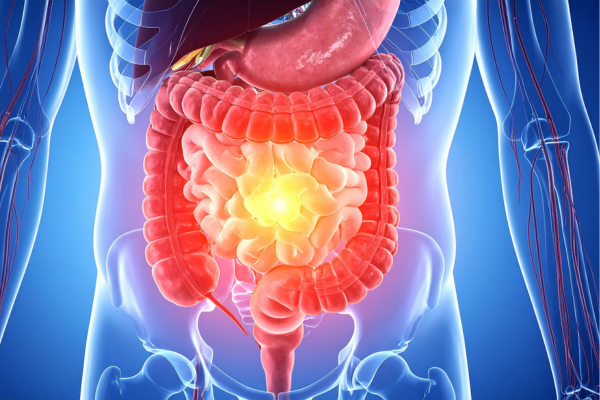 First, they draw water into the intestine, which can contribute to loose stools in some people. Second, they are fermented by gut bacteria, producing gas. In individuals with sensitive digestive systems, particularly those with IBS, this combination can lead to symptoms such as bloating, abdominal discomfort, and changes in bowel habits.
FODMAPs themselves are not unhealthy. Many foods that contain the, including fruits, vegetables, beans, dairy products, and whole grains, provide fiber and nutrients that support digestive health and feed beneficial gut bacteria. The issue is not the foods themselves, but rather how certain individuals tolerate specific carbohydrates.
Research shows that a structured FODMAP approach can improve symptoms in about 50–75% of people with IBS. Although these carbohydrates are most commonly associated with bloating and diarrhea, they can also contribute to constipation in certain individuals by affecting gut motility.
Because many FODMAP foods provide beneficial fiber and nutrients, the goal of this dietary approach is not long-term restriction, but identifying personal triggers.
Foods High in FODMAPs
FODMAPs occur in many everyday foods, including foods that are otherwise nutritious. People often tolerate certain FODMAP groups better than others. These carbohydrates are divided into categories based on their structure. During the reintroduction phase, these groups are tested separately to help determine which ones trigger symptoms.
Below are common examples of foods that contain higher amounts of FODMAP carbohydrates. This is not a complete list. One of the most reliable tools for identifying FODMAP content in foods is the Monash University Low FODMAP app.
 Oligosaccharides
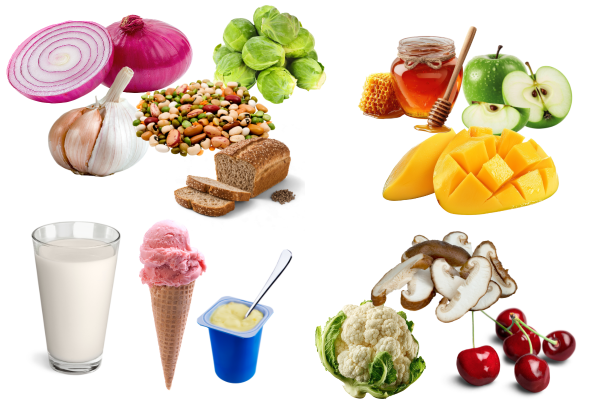
Examples include:
- Wheat and rye
- Onions and garlic
- Beans and lentils
Oligosaccharides may also appear in packaged foods. Ingredients such as inulin and chicory root are often added to foods marketed as “high fiber.” While these ingredients can support gut health for many people, they may trigger symptoms in individuals sensitive to FODMAPs. Checking ingredient lists can help identify these additions.
Lactose
Lactose is the natural sugar found in dairy products. Examples of higher-lactose foods include:
- Milk
- Ice cream
- Soft cheeses
- Regular yogurt
Many people assume they must eliminate all dairy if lactose is a trigger. The good news is that many aged or hard cheeses are naturally low in lactose and are often well tolerated. Examples include cheddar, Swiss, and parmesan. Some individuals also tolerate small amounts of lactose, especially when dairy is eaten with other foods.
Fructose
This category refers to foods that contain excess fructose compared with glucose, which may make them harder for certain individuals to absorb. Examples include:
- Apples
- Mango
- Honey
- High fructose corn syrup
Polyols (Sugar Alcohols)
Examples include:
- Stone fruits such as peaches, plums, and cherries
- Mushrooms
- Cauliflower
Polyols are also commonly found in sugar-free or “diet” foods, including sugar-free gum, candies, and some protein bars. On ingredient labels, these sweeteners often appear as ingredients ending in “-ol,” such as sorbitol, xylitol, and mannitol.
Because many foods in these categories provide fiber, vitamins, and beneficial plant compounds, the goal of this diet is to identify triggers while keeping the overall diet as varied and nutritious as possible.
How the Low FODMAP Diet Works
The Low FODMAP diet is a structured process designed to identify which types of carbohydrates trigger symptoms. It typically involves three phases.
Phase 1: Elimination
During the elimination phase, foods high in FODMAPs are temporarily reduced for about 2–6 weeks. The goal is to calm digestive symptoms and establish a baseline. Although this phase can feel restrictive, it is temporary and still allows for a variety of foods.
Phase 2: Reintroduction
Once symptoms improve, foods are systematically reintroduced by FODMAP category. Rather than adding random foods back into the diet, the reintroduction phase tests groups of FODMAPs, such as lactose, fructose, polyols, or oligosaccharides. Specific foods are used as test foods to evaluate tolerance within each group. This structured approach helps determine which carbohydrates trigger symptoms and which are well tolerated.
Phase 3: Personalization
The final phase focuses on building a long-term eating pattern based on individual tolerance. Foods that trigger symptoms may be limited, while other FODMAP foods can be included. The goal is to create the least restrictive diet possible while keeping digestive symptoms well managed.
Important Considerations
Because the elimination phase temporarily restricts many foods, this diet is not appropriate for everyone. It generally should not be used in individuals with a history of eating disorders or disordered eating, since restrictive diets can worsen unhealthy relationships with food.
Research also suggests that a “gentle Low FODMAP approach” may be helpful for certain individuals. Rather than eliminating all high-FODMAP foods, this strategy focuses on reducing a few of the most common triggers, such as onions, garlic, and large amounts of lactose, while keeping the diet more flexible.
Common Mistakes When Following the Diet
One client came to me after reading about the diet online. She had found several versions and ended up eliminating a large number of foods. Her symptoms improved, but she became hesitant to add foods back in. By the time she contacted me, she had been following a very restrictive version for about six months.
As a result, her intake of key nutrients—including calcium and fiber—had dropped significantly. We worked through the reintroduction process and discovered that she reacted to oligosaccharides and larger amounts of lactose, but tolerated the other FODMAP groups well. Once those foods were added back, her diet became much more varied and nutritionally balanced while her symptoms remained under control.
This example highlights an important point: the goal of this diet is not long-term restriction, but identifying specific triggers.
Who May Benefit from a Low FODMAP Diet
The Low FODMAP diet was developed to help manage symptoms of IBS and has been widely studied in this population.
For people with IBS, certain carbohydrates can trigger symptoms such as bloating, abdominal discomfort, gas, and changes in bowel habits. Identifying which foods contribute to symptoms can help improve digestive comfort while maintaining a varied and balanced diet.
 However, the diet does not help everyone with IBS. While many people experience improvement, others notice little or no change in symptoms. If you’ve tried the Low FODMAP diet without meaningful improvement, there is usually no benefit to continuing long term.
In that case, it’s important to work with your doctor or dietitian to explore other possible causes of digestive symptoms and identify alternative treatment strategies.
The Bottom Line
The Low FODMAP diet is a structured approach designed to help identify carbohydrates that trigger digestive symptoms. Developed by researchers at Monash University, it is one of the most studied dietary strategies for managing symptoms of IBS.
Many foods that contain FODMAPs, including fruits, vegetables, legumes, and dairy, are nutritious and support gut health. For that reason, the goal of this diet is not permanent restriction, but identifying personal triggers so the rest of the diet can remain varied and balanced.
When used correctly, the process can help individuals better understand how different foods affect digestion and develop a sustainable eating pattern that supports digestive health.
If you’re dealing with persistent bloating or IBS symptoms, you don’t have to figure it out alone. I regularly work with clients to identify digestive triggers and develop practical strategies that support both gut health and overall nutrition. Learn more about working with me here.
References
Halmos EP, Power VA, Shepherd SJ, Gibson PR, Muir JG.
A diet low in FODMAPs reduces symptoms of irritable bowel syndrome.
Gastroenterology. 2014.
https://pubmed.ncbi.nlm.nih.gov/24076059/
Lacy BE, Pimentel M, Brenner DM, et al.
ACG Clinical Guideline: Management of Irritable Bowel Syndrome.
American College of Gastroenterology. 2021.
https://webfiles.gi.org/links/virtgrandround/Intl_ACGVGR_Lacy_IBS_Guidelines.pdf
Gibson PR, Shepherd SJ.
Evidence-based dietary management of functional gastrointestinal symptoms: The FODMAP approach.
Journal of Gastroenterology and Hepatology. 2010.
Altobelli E, Del Negro V, Angeletti PM, Latella G.
Low-FODMAP diet improves irritable bowel syndrome symptoms: A meta-analysis.
Nutrients. 2017.
https://pubmed.ncbi.nlm.nih.gov/28846594/
Böhn L, Störsrud S, Liljebo T, et al.
Diet low in FODMAPs reduces symptoms of irritable bowel syndrome as well as traditional dietary advice: A randomized controlled trial.
Gastroenterology. 2015.
https://pubmed.ncbi.nlm.nih.gov/26255043/
Nanayakkara WS, Skidmore PM, O’Brien L, Wilkinson TJ, Gearry RB.
Efficacy of the low FODMAP diet for treating irritable bowel syndrome.
Gastroenterology & Hepatology. 2016.
https://pmc.ncbi.nlm.nih.gov/articles/PMC4918736/
Gibson PR, Halmos EP, Muir JG.
Review article: FODMAPs and IBS – mechanisms and clinical application.
Journal of Gastroenterology and Hepatology. 2017.
Monash University FODMAP Research Program
https://www.monashfodmap.com/
Chey WD, et al.
AGA Clinical Practice Update on the Role of Diet in Irritable Bowel Syndrome.
Gastroenterology. 2022.
Liu J, Chey WD, Haller E, et al.
Low-FODMAP diet for treatment of irritable bowel syndrome.
2020 Review.
https://pubmed.ncbi.nlm.nih.gov/31986083/
RELATED POSTS

MEET MARTHA

I especially love problem-solving, whether it’s helping women defeat issues plaguing them for years, helping a busy executive find practical ways to get heart healthy, or providing tips to help you reverse diabetes. That’s why I’m on a constant quest to expand my knowledge by staying on top of the latest research.
1 Comment
Leave a Comment

20 Ways To Eat Out 550 Calories or Less!
No time to cook? We’ve got you covered. Here are 20 healthy meals from a variety of cuisines that won’t pack on the pounds. Most of them also have less than 30 grams of carbs.
Subscribe to my newsletter and get this free download.
Gold Available For Sale, We Offer The Best For You +447401473736
Gold for Sale in USA, Kampala Uganda, Canada, Australia, Europe. No hidden payments and no payments upfront if you are a serious buyer. We do CIF to our serious buyers without delays or FOB to those more serious buyers who want to come to Uganda for a pick up. We recommend our good buyers to fly to uganda and do the testing and visit our mining sites and do a due diligence for more trust and long term business
24 Karat, 98+ Purity Gold Wholesale supplier. Gold world is a leading global supplier and trader of an extensive range of 24 Karat Gold. Our sales team is committed to providing impeccable services to our clients, and they are always ready to answer your questions.
Smooth Delivery on Time Worldwide
Along with the best quality of our 24 Karat Gold, we take care of the packaging process as well. We always involve high-technique packaging system which provide barrier protection against moisture, dust, or any kind of mechanical damage during transportation. Not only this, we perform smooth delivery of our 24 Karat Gold within the given date and time. Our entire gold product is delivered in 3–7 days by courier worldwide
CONTACT:
Telegram: @Ranko3222
WhatsApp📞: +447401473736
https://toprapidsolution.blogspot.com/
Impeccable Feature of 24 Karat Gold
We Work Directly With The Gold buyers To Cut Out The Middle Man, So We Can Avoid Wasting Time. We Are The Leading Gold Sellers. Best Prices Guaranteed .Find Us In Uganda, Kampala. Trusted Gold Sellers — Buy Our Gold with Confidence. Easy Gold Selling Process. Easy Selling Process. Satisfaction Guaranteed. No Hidden Fees. Trusted Experts. Secure Transactions. Instant Quotes. Gold Bars, Gold Bullion And Nuggets. Gold dust, gold bars and gold nugget for sale· Gold nugget, Gold bar, Gold dust · gold bullion buyers and sell.
Luxembourg, Singapore, Ireland, Qatar, Switzerland, Norway, United States, United Arab Emirates, Brunei, Hong Kong, germany, Austria, Belgium, Czech Republic, Denmark
Estonia, Finland, France, Germany, Greece, Hungary, Iceland, Italy, Latvia, Lithuania, Luxembourg, Malta, Netherlands, Norway, Poland, Portugal, Slovakia, Slovenia, Spain, Sweden, Switzerland
We are everywhere in New York City, New York
Los Angeles, California, Chicago, Illinois, Houston, Texas, Phoenix, Arizona, Philadelphia, Pennsylvania, San Antonio, Texas, San Diego, California, Dallas, Texas, San Jose, California, Austin, Texas, Jacksonville, Florida, Fort Worth, Texas, Columbus, Ohio, San Francisco, California, Charlotte, North Carolina, Indianapolis, Indiana
Seattle, Washington, Denver, Colorado, Washington, D.C.
Sydney, New South Wales, Melbourne, Victoria, Brisbane, Queensland, Perth, Western Australia, Adelaide, South Australia, Gold Coast, Queensland, Canberra, Australian, Capital Territory, Newcastle, New South Wales, Central Coast, New South Wales, Hobart, Tasmania
SERIOUS INQUIRIES ONLY PLEASE