Get The Most Nutrition From Your Veggies

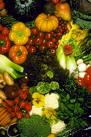
It is no big suprise that vegetables are healthy. But did you that there are several factors that can have an major impact on nutrients your body is actually absorbing? For example, how often do you snack on carrots by themselves or add a fat free salad dressing to your salad? Maybe you are following a raw food diet and tend to eat most of your veggies uncooked. Or perhaps your are If these situations sound familar, your body may not be absorbing all the nutrients that it could be!
Tips to maximize your nutritional intake from vegetables:
1. Don’t be fat phobic. Fat increases absorption of antioxiants such as lycopene and beta carotene. Try avoid fat free salad dressings. You can make you own low fat dressing by adding a little oil and more vinegar. Or grate a little cheese on your tomatoes or spinach. Or if you like to snack on carrots and grape tomatoes in the afternoon, try adding a few almonds or a string cheese with them. Or even a little hummus that contains some olive 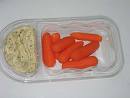 oil.
oil.
2. Nutrients get better absorbed if the vegetables are cut into smaller pieces, such as grating or at least chewed thoroughly. You might want to try grating or mincing your veggies. If this is not an option, at least chew them thoroughly!
3. Some vegetables are better absorbed cooked versus raw. This is the opposite of what many of you have heard!
4. Cooking methods such as microwaving tend to preserve more nutrients as compared to boiling or pressure cooking.
5. Bottom line, even if you can’t follow all of the above suggestions, work on increasing your vegetable intake – raw or cooked, big pieces or small! Your body will still get nutritional benefits. But if possible, try some of the above suggestions.
6. Lastly, your best bet is to eat a variety of vegetables. Different vitamins, minerals, antioxidants and phytochemicals are found in different vegetables.
For more information on this subject, check out this article on getting the most nutrition from your veggies
July 27, 2009 by Allison Aubrey
Tomatoes are certainly nutritious — a good source of the antioxidants lycopene and beta-carotene. But consider this: if you eat a tomato without adding a little fat — say a drizzle of 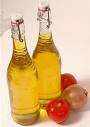 olive oil — your body is unlikely to absorb all these nutrients.
Scientists at Iowa State University figured this out a while ago. They recruited graduate students to eat bowls of salad greens with tomatoes and various types of salad dressings — from fat-free to regular Italian. “Basically once a month for several months we’d show up first thing in the morning,” recalls participant Gregory Brown, now a professor of exercise science at the University of Nebraska. Researchers put IV lines into the participants’ veins and drew blood samples before and after they’d eaten the salads in order to get precise measurements of the absorption of nutrients.
“The salads all tasted the same to me,” says Brown. But when researchers went back and analyzed the blood samples they realized that people who had eaten fat-free or low-fat dressings didn’t absorb the beneficial carotenoids from the salad. Only when they had eaten the oil-based dressing did they get the nutrients.
Carotenoids are the pigments responsible for red-, yellow- and orange-colored fruits and vegetables. And carotenoids are also found in dark green vegetables such as spinach. The compounds convert to Vitamin A in the body, and studies have found that carotenoids have anti-oxidant activity which may help protect cells from damage caused by free radicals. Human studies have linked high consumption of fruits and vegetables to reduced risk of cancer.
Beta-carotene researchers were not particularly surprised by the findings of the fat-free vs. regular Italian salad dressing study. “We already knew that carotenoids were fat soluble,” explains Wendy White, a professor of Human Nutrition at Iowa State University. The results helped reinforce the idea that a little fat is healthy.
Chop And Chew
There are other ways to help maximize the absorption of carotenoid nutrients. Chopping or 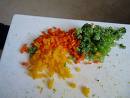 grating breaks down the plant material. “The finer the particle size … the better the absorption of beta-carotene,” explains White.
The findings of nutrition research often go against the grain of trendy food ideas. For instance, many people have heard that raw vegetables are best. But if you’re eating carrots, it may be helpful to cook them gently. The heat can soften the food allowing more nutrients to be released.
A recent study in the Journal of Food Science suggests that some cooking methods may be better than others. Researchers at the University of Murcia in Spain cooked 20 different kinds of vegetables six different ways. Then they analyzed how well the foods retained antioxidants. They found that microwaving helped maintain the antioxidants, whereas boiling and pressure cooking led to the greatest losses.
Green beans, beets and garlic all did well with heat — maintaining beneficial phytonutrients after most kinds of cooking. The antioxidant value in carrots actually increased after cooking.
Experts explain that boiling may allow nutrients to leach into the pan water that people end up tossing out, especially with water-soluble nutrients such as Vitamin C and the B Vitamins.
Eat Plenty Of Colors
As testing methods have become more sensitive, scientists have the ability to peer into our foods and tally up all the phytonutrients that may be beneficial. But experts say the ways in which our bodies may use and absorb these compounds are complicated. Therefore, many experts say it’s best not to fixate too much on how food is prepared. Instead, focus on eating more plant foods — of all colors.
Jeffrey Blumberg, an antioxidant expert at Tufts University, says “What’s important is that you find a way to cook that’s palatable to you so you’re getting lots of plant foods.”
A recent study in the Journal of Food Science suggests that green beans, beets and garlic maintain their antioxidant levels even after most kinds of cooking. The antioxidant value in carrots actually increased after gentle cooking.
RELATED POSTS
Sorry, we couldn't find any posts. Please try a different search.
MEET MARTHA

I especially love problem-solving, whether it’s helping women defeat issues plaguing them for years, helping a busy executive find practical ways to get heart healthy, or providing tips to help you reverse diabetes. That’s why I’m on a constant quest to expand my knowledge by staying on top of the latest research.
20 Ways To Eat Out 550 Calories or Less!
No time to cook? We’ve got you covered. Here are 20 healthy meals from a variety of cuisines that won’t pack on the pounds. Most of them also have less than 30 grams of carbs.
Subscribe to my newsletter and get this free download.