
Does Cortisol Cause Weight Gain? What the Science Says

Frustrated with the scale not moving? Or noticing that your waistband feels tighter even though your habits haven’t changed?
You may have seen headlines or social media posts blaming cortisol for stubborn weight gain, especially around the belly. There are even supplements marketed specifically to “lower cortisol” and promote weight loss.
As a dietitian specializing in metabolic health, I get asked about cortisol all the time. The truth is that cortisol plays an important role in the body, and the relationship between cortisol and weight gain is more complex than many online claims suggest.
Let’s take a closer look at what cortisol actually does in the body and what the science says about its connection to weight.

What Is Cortisol?
Cortisol is a hormone produced by the adrenal glands, which sit on top of the kidneys. It plays an important role in the body’s response to stress and helps regulate several key functions, including metabolism, blood sugar levels, inflammation, and blood pressure.
Although cortisol is often called the “stress hormone,” it is not the only hormone involved in the stress response. Other hormones, including epinephrine (adrenaline) and norepinephrine, are also released during stress and help prepare the body for action by increasing heart rate, blood flow, and energy availability.
Cortisol also helps regulate the sleep-wake cycle, supports immune function, and helps maintain energy balance throughout the day.
In other words, cortisol is not a “bad” hormone. Healthy cortisol levels are essential for normal metabolism and overall health.
What Do Normal Levels Look Like Throughout the Day?
Cortisol follows a natural daily rhythm known as a circadian rhythm.
Levels are typically highest in the early morning shortly after waking. This increase helps you feel alert and ready to start the day. Cortisol levels then gradually decline throughout the day and reach their lowest point at night as the body prepares for sleep.
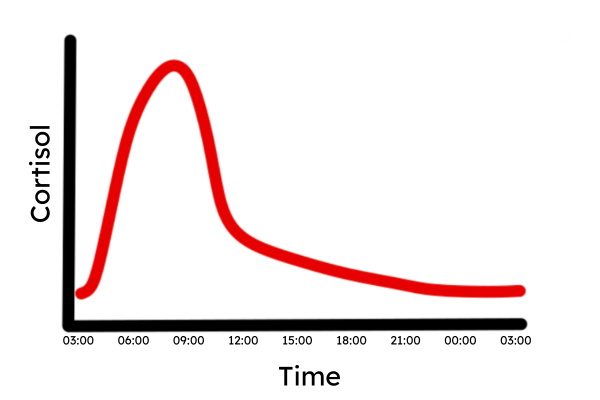 This rhythm plays an important role in regulating energy levels, metabolism, and the sleep-wake cycle.
Disruptions to this pattern can occur with chronic stress, poor sleep, shift work, and certain medical conditions.
When Cortisol Levels Become Too High
Truly elevated cortisol levels are relatively uncommon and are usually caused by specific medical conditions.
One example is Cushing’s syndrome, a disorder in which the body produces too much cortisol. This may occur due to certain medications, tumors of the adrenal gland, or tumors affecting the pituitary gland that stimulate cortisol production.
People with Cushing’s syndrome often develop a distinct pattern of symptoms such as significant weight gain around the abdomen and face, muscle weakness, high blood pressure, and changes in skin appearance.
If someone truly suspects abnormally high cortisol levels, it’s important to speak with a physician. Evaluation is typically managed by an endocrinologist.
Many symptoms people attribute to “high cortisol,” such as fatigue, weight gain, or poor sleep, can have many possible causes.
How Doctors Test Levels
If cortisol excess is suspected, doctors can measure cortisol in several ways. Because cortisol levels change throughout the day, timing is important when interpreting results.
A morning blood test is one of the most common ways cortisol is measured. Since cortisol normally peaks in the morning, this test can help identify unusually high or low levels.
Another option is salivary cortisol testing, which measures cortisol in saliva at specific times during the day or late at night to evaluate cortisol patterns.
Doctors may also order a 24-hour urine cortisol test, which measures the total amount of cortisol the body produces over an entire day.
These tests are typically used when a medical condition affecting cortisol production is suspected.
Can Cortisol Cause Weight Gain?
Cortisol is often blamed for stubborn weight gain, particularly around the abdomen. While cortisol can influence metabolism, the relationship between cortisol and body weight is complex. Cortisol helps regulate blood sugar and energy balance and makes energy available during periods of stress. Over time, chronic stress may influence weight in several ways.

- Appetite and food preferences
Stress can affect appetite and food choices. Some people experience increased cravings for calorie-dense foods, particularly those high in sugar and refined carbohydrates. These foods provide quick energy but can contribute to excess calorie intake if consumed frequently.
- Blood sugar and insulin regulation
Cortisol also affects blood sugar regulation. Persistently elevated cortisol levels may contribute to insulin resistance in some individuals, which can make weight management more difficult.
- Fat distribution
Cortisol may also influence where fat is stored in the body. Some research suggests that higher cortisol levels are associated with increased visceral fat, the type of fat stored around the abdominal organs. This is why cortisol is sometimes linked to what people call “cortisol belly fat.” Visceral fat is metabolically active and more strongly linked to cardiometabolic risk than fat stored in other areas of the body.
These mechanisms help explain how chronic stress may influence weight over time. However, cortisol rarely acts alone. Sleep patterns, nutrition, physical activity, genetics, and aging all influence body weight and fat distribution.
For most people, weight gain is not caused by dangerously high cortisol levels. Instead, a combination of lifestyle and metabolic factors usually plays a larger role.
Does Vigorous Exercise Raise Stress Hormones?
Cortisol levels naturally increase during exercise, particularly during vigorous or prolonged activity. This response is a normal part of the body’s physiology and helps the body meet the energy demands of physical activity. One of cortisol’s key roles is to mobilize fuel. During exercise, cortisol helps increase the availability of glucose and fatty acids so muscles have the energy they need to sustain activity.
 Studies show that moderate to high-intensity exercise can temporarily increase cortisol levels, especially during longer or more intense workouts. However, this increase is short-lived, and cortisol levels typically return to normal after the workout. Regular physical activity is also associated with better long-term regulation of the body’s stress response and improved metabolic health.
I once worked with a client with PCOS who loved taking spinning classes. She had read online that vigorous exercise could worsen hormone balance by increasing cortisol, so she stopped going to spin and switched to walking instead. She was disappointed because she truly enjoyed those classes.
When I asked how spinning made her feel, she said it made her feel great. In that case, I encouraged her to return to the exercise she enjoyed. If she had told me those workouts left her feeling exhausted for hours or interfered with her sleep, I might have recommended adjusting her exercise routine.
The key is that exercise should leave you feeling stronger and energized, not depleted.
Lifestyle Habits That Help Regulate Cortisol
Because cortisol is closely tied to the body’s stress response, lifestyle habits play an important role in maintaining healthy cortisol patterns.
- Prioritize sleep
Poor sleep can disrupt cortisol rhythms and increase stress hormone levels. Maintaining consistent sleep and wake times and creating a relaxing bedtime routine can help support healthy cortisol patterns. - Maintain balanced meals
Eating regular meals that include protein, healthy fats, and carbohydrates helps support stable blood sugar levels. Large swings in blood sugar may trigger stress hormones, including cortisol. - Stay physically active
Regular exercise supports metabolic health and helps regulate the body’s stress response. The most important factor is choosing activities you enjoy and can maintain consistently. - Manage chronic stress
Mindfulness, meditation, journaling, time outdoors, and other stress-management techniques may help reduce chronic stress and support a healthier stress response.
Supplements marketed to “lower cortisol” are widely promoted online. While some herbs and nutrients are being studied for their effects on stress, evidence is still limited and results can vary between individuals.
When clients tell me they are taking supplements to support cortisol balance, I always ask whether they feel the supplements are helping. If someone feels better while taking them, it may be reasonable to continue. As with any supplement, it’s important to review them with your physician to make sure there are no contraindications or medication interactions.
The Bottom Line
Cortisol is often blamed for stubborn weight gain, but the relationship is more complex than many headlines suggest.
In healthy individuals, cortisol follows a normal daily rhythm and temporarily rises during stress or exercise to help provide the body with energy. Truly elevated cortisol levels are uncommon and usually linked to medical conditions that require evaluation by a physician.
Chronic stress can influence appetite, blood sugar regulation, and fat distribution, which may affect weight over time. However, cortisol rarely acts alone. Sleep, nutrition, physical activity, and overall metabolic health all play important roles in weight regulation.
A more effective approach is to support the body’s natural stress response through healthy lifestyle habits such as prioritizing sleep, eating balanced meals, staying physically active, and managing stress.
Need help with a personalized nutrition and lifestyle to help you meet your goals? Contact me to learn more about working with me virtually.
References
Hackney AC. Exercise as a stressor to the human neuroendocrine system. Journal of Endocrinological Investigation.
https://pubmed.ncbi.nlm.nih.gov/18787373/
Hill EE, Zack E, Battaglini C, Viru M, Viru A, Hackney AC. Exercise and circulating cortisol levels: the intensity threshold effect. Journal of Endocrinological Investigation.
https://pubmed.ncbi.nlm.nih.gov/17162994/
Charmandari E, Tsigos C, Chrousos G. Endocrinology of the stress response. Annual Review of Physiology.
https://pubmed.ncbi.nlm.nih.gov/17155905/
Fried SK, Lee MJ, Karastergiou K. Shaping fat distribution: New insights into the molecular determinants of depot- and sex-dependent adipose biology. Endocrine Reviews.
https://pubmed.ncbi.nlm.nih.gov/24423945/
Nieman LK, Biller BMK, Findling JW, et al. The diagnosis of Cushing’s syndrome: an Endocrine Society Clinical Practice Guideline. Journal of Clinical Endocrinology & Metabolism.
https://pubmed.ncbi.nlm.nih.gov/18334580/
Rosmond R. Role of stress in the pathogenesis of the metabolic syndrome. Psychoneuroendocrinology.
https://pubmed.ncbi.nlm.nih.gov/12165370/
dam TC, Epel ES. Stress, eating and the reward system. Physiology & Behavior.
https://pubmed.ncbi.nlm.nih.gov/18722466/
RELATED POSTS

MEET MARTHA

I especially love problem-solving, whether it’s helping women defeat issues plaguing them for years, helping a busy executive find practical ways to get heart healthy, or providing tips to help you reverse diabetes. That’s why I’m on a constant quest to expand my knowledge by staying on top of the latest research.
20 Ways To Eat Out 550 Calories or Less!
No time to cook? We’ve got you covered. Here are 20 healthy meals from a variety of cuisines that won’t pack on the pounds. Most of them also have less than 30 grams of carbs.
Subscribe to my newsletter and get this free download.