How Much Water Should You Drink a Day?

You’ve probably heard you that should drink 8 cups of water a day. Or drink enough so that your urine is clear colored. You may also have heard that caffeinated  beverages don’t count as water and can actually dehydrate you. As you may have guessed, fluid recommendations have changed in the past few years. Read on to learn the real deal on fluid – including what counts and how much you need each day.
First of all, let me say that I am huge fan of drinking plenty of water. I personally find I get headaches and just don’t feel quite right if I don’t drink at least 8 cups a day (and more if I am exercising). But I want to put aside my personal “pro-water” bias and give you more of the science!
Functions of water in the body
Our body is made up of 55 – 60% water. Specifically, water makes up 93% of our blood, 75% of skeletal muscle, 70% of the brain and 10% of fat stores. Water is essential for life and plays vital roles in the body, including regulation of metabolism and body temperature. Every day we lose water about 2 1/2 liters of water through breathing, perspiration, urine and bowel movements. For our bodies to function properly, we need to replenish these fluid losses by consuming beverages and foods that contain water. (picture: topnews.in)
How much water do we need a day?
For years, health professionals told us to follow the 8 x 8 rule (64 ounces of water a day). Recent literature reviews have shown that that there is no scientific basis for this recommendation! So the question is – how much fluid does the average healthy adult living in a temperate climate need? The Institute of Medicine determined that an adequate intake (AI) for men is roughly 3 liters (about 13 cups) of total beverages a day. The AI for women is 2.2 liters (about 9 cups) of total beverages a day.
What counts as “water”?
The fluid guidelines may sound high to you, but keep in mind that we meet ~ 25% of our fluid needs from food. Many fruits and veggies are 90% or more water by weight. For example, tomatoes, lettuce, watermelon and oranges (just to name a few) can contain up to 5 ounces of water per serving. Check out this chart for more info (remember to divide by 28 to convert grams to ounces!)
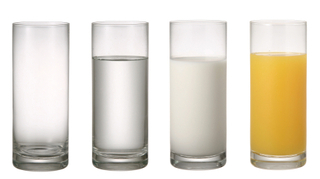
In addition, beverages such as milk and juice count towards your fluid goal as they are composed mainly of water. Here is a question I get asked all the time – do caffeinated beverages, such as coffee, tea or soda count towards your daily total fluid intake? The answer is yes! Studies do show that caffeinated beverages contribute towards hydration in people who are accustomed to consuming caffeine.
Effects of not drinking enough fluids
Since our bodies are 55 – 60% water, being dehydrated can affect our entire system. Muscles fatigue easily or cramp, which will affect athletic performance and overall energy levels. Dehydration can lead to constipation. Drinking too little fluid can leave you with a dry mouth and dry eyes. Dehydration also affects our brain – compromising memory, concentration, focus and mood. Lastly, dehydration can increase risk of kidney stones in some people. Are these enough
 reasons to drink up.
How much water should you drink a day?
Most health experts are now telling people to relax about meeting their fluid requirements and pay more attention to your body’s thirst signals. Your body will naturally increase fluid intake if you are dehydrated. However, I am a proponent of drinking adequate fluid and feel that many of my clients don’t drink enough. Many of them report feeling better when they increase their fluid intake. So here are my tips:
- Assuming you are consuming at 4 – 5+ servings of fruits/veggies a day (which contain water), aim for at least 6 cups of fluid a day for women and 9 cups for men. This is just a average recommendation; it depends upon how many watery foods you consume in a day.
- Drink more than this is if you are exercising,
- Increase your fluid intake in hot or humid weather due to higher sweat rates. In addition, altitudes of greater than 8,200 feet can increase fluid needs.
- Caffeinated beverages count towards your fluid needs, but I would recommend not consuming all your fluid in this form. Drinking tea (taken from Health Castle website) can also be a great way to hydrate yourself as it’s packed with healthy antioxidants
- If you aren’t a fan of plain water, try squeezing some fresh lemon or lime to give it flavor.
- Keep in mind that you can meet some of your fluid needs with milk or juice (or even …. soda … though I strongly discourage this!) so don’t feel pressured to down 8 cups or more of water a day. But if you watching your weight, keep in mind that the calories from these beverages can really add up. Water is the most available, cheapest and lowest calorie source of fluid
- Drinking adequate fluid MAY help with weight control by helping to keep you feeling full. In addition, at times, our brains may think we are hungry when we are really dehydrated and thirsty. For example, if you are craving foods like ice cream or fruit, your body may be really looking for water. So staying hydrated may help keep some cravings at bay (not that fruit cravings are a bad thing!)
- Drink wait until the end of the day to chug 8 glasses of water. Not only will this keep you running to the bathroom all night, but you won’t be hydrating your brain and muscles during the day … when you need it the most .
- It is highly unlikely that the average person will drink too much water. The exception may be with endurance athletes who drink large amounts of water when exercising for long periods of time. This can cause a potentially dangerous condition called hyponatremia (low sodium levels in the blood). This can be prevented by drinking a sports beverage that contains electrolytes (including sodium)
RELATED POSTS



MEET MARTHA

I especially love problem-solving, whether it’s helping women defeat issues plaguing them for years, helping a busy executive find practical ways to get heart healthy, or providing tips to help you reverse diabetes. That’s why I’m on a constant quest to expand my knowledge by staying on top of the latest research.
20 Ways To Eat Out 550 Calories or Less!
No time to cook? We’ve got you covered. Here are 20 healthy meals from a variety of cuisines that won’t pack on the pounds. Most of them also have less than 30 grams of carbs.
Subscribe to my newsletter and get this free download.