
Are You “Carb Confused”?

 If you’re confused about carbs, you’re not alone. The advice on carbs seems to differ from one day to the next. One day fat is bad and carbs are good; the next day we are told the opposite. The truth is there’s not a simple answer. I recently did a guest post as a “gnutritionist” on the Gnu Bar website on Clearing Carb Confusion. Here is my article.
Carbs 101
There are two different categories of carbs: sugars and starches. The classification depends on the chemical structure of food and how quickly the sugar is digested and absorbed in the body. Sugars are considered simple carbs, while starches and fiber are complex carbs.
The three basic sugars, which are simple carbs, are: glucose, the body’s main fuel; fructose, found in honey, fruit and high fructose corn syrup; and galactose, a sugar found in milk. These basic sugars combine with each other to form other simple sugars including sucrose (table sugar), maltose and lactose (a milk sugar).
Long chains of sugar are called complex carbs, or starches. Examples  include breads and cereals, legumes and starchy vegetables, such as corn and peas. Fiber, also known as roughage or bulk, is another complex carb. It includes all parts of plant foods that the body doesn’t digest. (pic: public.iastate.edu)
All carbs are not created equal.
– Healthy simple carbs: naturally occurring simple carbs found in fruits, milk, milk products and vegetables contain vitamins and minerals and should be included in your diet.
– Not-so-healthy simple carbs: processed and refined sugars such as candy, beverages like regular soda and sweetened ice teas and fortified waters, syrup and table sugar are often referred to as “empty calories” and can contribute to weight gain. Studies are linking them to other health risks as well, such as high triglycerides and low HDL (good) cholesterol. Keep your intake of these foods and beverages to a minimum.
– Healthy complex carbs: examples include legumes, whole grain breads, pastas, cereals, oatmeal, and brown rice; these foods contain more vitamins, minerals, and disease fighting antioxidants as well as fiber. Fiber-rich foods have numerous health benefits including regularity and overall bowel health; they also lower cholesterol, help to lower blood glucose and aid in weight management.
– Not-so-healthy complex carbs: white rice, white bread, white pasta, cereals and crackers with less than 3 grams of fiber per serving. The more refined or processed a complex carb is, the fewer nutrients and fiber it contains. In addition, these foods tend to have a higher glycemic index.
Bottom line, some carbs are healthier than others. So skip that candy bar in the vending machine and choose an apple instead!
What’s the buzz on glycemic index?
All carbs eventually break down into sugar in your blood. Your body then releases insulin to control the levels of sugar in your blood. The glycemic index measures how quickly a particular carbohydrate will affect blood sugar levels. The higher the index, the quicker the rise in blood sugar. In general, starchy foods that are processed, like refined grain products (i.e. white rice) have a high glycemic index. Non-starchy vegetables such as greens, milk, legumes and some fruits have a low glycemic index while whole grains, sweet potatoes and other fruits have a moderate glycemic index. Research has suggested that a diet including moderate and lower glycemic carbs has health benefits. You can use the glycemic index as a guide for selecting your carbs; however keep in mind it is far from a perfect science; for example, a candy bar with nuts can have a lower glycemic index than brown rice!
How much added sugar should you eat a day?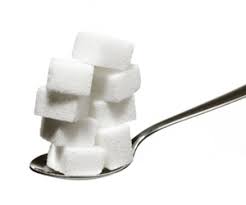
Added sugars are sugars and syrups that are added to foods or beverages during processing or preparation. This does not include naturally occurring sugars such as those that occur in milk and fruits. Our intake of added sugar is a growing problem. It plays a major role in obesity and is linked to numerous diseases. The American Heart Association has specific guidelines for added sugar:
– no more than 100 calories a day from added sugar for most women
– no more than 150 calories a day for most men.
That’s about 6 teaspoons of added sugar for women and 9 for men. You may be saying “I don’t add sugar to my foods”. But here are the stats: most Americans get more than 22 teaspoons — or 355 calories — of added sugar a day! Check food labels for hidden sources of added sugars including brown sugar, corn sweetener, corn syrup, dextrose, fructose, fruit juice concentrates, glucose, high-fructose corn syrup, honey, lactose, maltose, malt syrup, molasses, raw sugar and sucrose. (pic:foodnutritionscience.com)
Tips for choosing healthier Carbs.
1. Avoid sugar sweetened beverages. This includes soda, flavored waters, bottled ice teas, flavored ice coffee drinks and sports beverages (unless you plan on doing a strenuous workout.).
2. Become label savvy. Check labels for sugar grams as well as servings per container. For example, check out the food label on a 20 ounce bottle of iced tea. The serving size is only 8 ounces, so if you drink the entire bottle, you’d actually consume 2 1/2 servings. This comes out to a whopping total of 45 grams of added sugar or 11 teaspoons! FYI … 4 grams of sugar = 1 teaspoon.
3. Select whole grain rice, breads and cereals instead of refined grains. Examples of whole grains include whole wheat, whole barley, whole oats, bulgur, quinoa, kamut, spelt, buckwheat, wheat berries and amaranth. Look for “whole” or “whole grain” before the grain’s name in the ingredient list on a food label. (pic: fhg.org)
4. Limit juice – even juice without added sugar is a concentrated source of  calories. The whole fruit contains more fiber and is more filling than drinking juice.
5. Don’t worry about the naturally occurring sugars found in fruit, milk or plain yogurt, unless you have been advised to limit these foods for a medical condition, like diabetes.
RELATED POSTS


MEET MARTHA

I especially love problem-solving, whether it’s helping women defeat issues plaguing them for years, helping a busy executive find practical ways to get heart healthy, or providing tips to help you reverse diabetes. That’s why I’m on a constant quest to expand my knowledge by staying on top of the latest research.

20 Ways To Eat Out 550 Calories or Less!
No time to cook? We’ve got you covered. Here are 20 healthy meals from a variety of cuisines that won’t pack on the pounds. Most of them also have less than 30 grams of carbs.
Subscribe to my newsletter and get this free download.