



Many people feel like they have hypoglycemia (myself included!) and report having one or more of the above symptoms if they go too long without eating or eat sugary foods alone. But in reality, if we went to a doctor and had blood work done to confirm this medical condition, the majority of us would be told we don’t actually have it!
Diagnosing low blood sugar
While most of us just have these annoying symptoms on occasion, some people have severe symptoms. I recently a client who really felt like she was going to pass out if she didn’t have lunch on time. If you are having severe symptoms, you should see your doctor to first rule out other causes. Your doctor will evaluate your symptoms and perform a blood test to check your glucose levels. Generally, hypoglycemia is defined as a serum glucose level (the amount of sugar or glucose in your blood) below 70 mg/dL. Some people with severe symptoms do get diagnosed with “reactive hypoglycemia”. Reactive hypoglycemia is low blood sugar that occurs 1-3 hours after a meal. Generally no medical treatment is needed for this condition, however paying special attention to your diet is key! But even if you haven’t been diagnosed with this condition, following my tips below can help prevent your symptoms from occurring.
Tips to prevent low blood sugar
1. Don’t go too long without eating – ideally no more than 3 hours. This means you’ll have to plan snacks in between meals, including a midmorning and afternoon snack.
2. Eat balanced meals that include protein, fat and high fiber carb. For example, a breakfast of 1-2 eggs with 2 whole wheat toast with a little fat spread may hold you longer than a bowl of cereal. Pay attention to how various meals make you feel. If you have a lower protein meal, you may need to eat your snack earlier.
3. Include rich in soluble fiber as this will slow the rise and fall of blood sugar. Examples include: oatmeal, oatbran, legumes, barley, apples, flaxseed, sweet potato, berries, sweet potato and psyllium (or foods enriched with psyllium).
4. Make sure you carry snacks with you. The goal is to prevent low blood sugar – not have to treat it. Eat your snack approximately 3 hours after your meal.
The best kind of snacks include protein, fat and carbs. But of course you’ll need to limit your portion to avoid gaining weight. Here are some suggestions:
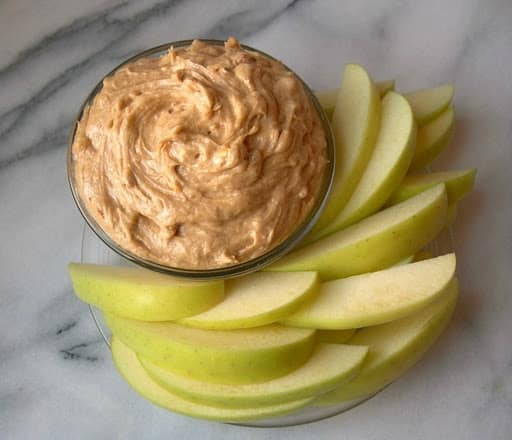
– 2 tsp peanut butter on 1/2 apple (130 cal) (pb pic credit)
– 1/2 cottage cheese or 2% greek yogurt and 1/2 berries (~ 140 cal)
– mini whole wheat pita, slice of avocado and 1 oz turkey (155 cal)
5. Avoid or limit sugary foods. If you must have them, try to eat them right after a meal (i.e. few forkfuls of a dessert)
6. Pay attention to how caffeine makes you feel as it can worsen symptoms in some people. I recently had a client who reported an exacerbation of low blood sugar symptoms on the weekends, despite eating exactly the same. We finally figured out it was the real coffee she was having on the weekend versus the decaf she had weekdays.
7. Stress can also worsen feelings of hypoglycemia. I don’t any quick tips to alleviate stress … just be aware of this! It might be a good idea to avoid caffeine if you feel you’ll have a stressful day.
8. If you are a diabetic and get low blood sugar, treat it with 15 grams of fast acting carbohydrates. Read more about this on the American Diabetic Association website.


