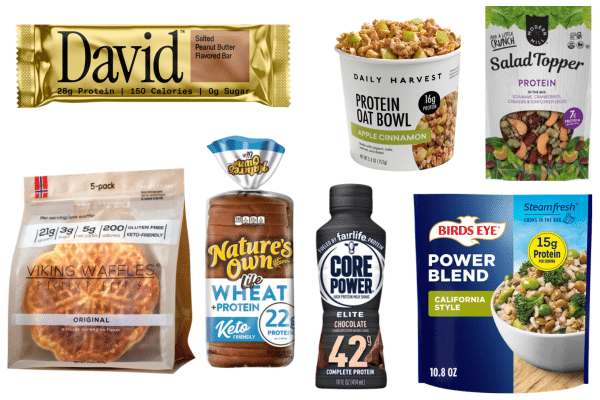
Protein is everywhere right now. Energy bars, drinks, cereal, yogurt, and even bread now carry “high protein” claims on the label. We tend to associate protein with strength, metabolism, weight control, and healthy aging. When we see “high protein,” we often assume the product is healthier.
So do we really need all this protein? And are you actually meeting your needs?
The quick answer is that most adults probably consume enough protein to prevent deficiency. But that is not the same as eating enough to support muscle, metabolic health, body composition, or long-term resilience. Certain groups may be more likely to fall short, including older adults, vegetarians, individuals following low-calorie weight-loss plans, and those using GLP-1 medications that reduce appetite.
The current protein recommendation was designed to prevent deficiency. It was not created to optimize performance, preserve lean mass, or support specific health goals. That distinction matters. In this post, we’ll clarify what the current protein recommendation actually means, when higher intakes may be helpful, how to estimate your personal needs, and whether protein timing makes a difference.
The Recommended Dietary Allowance (RDA) for Protein
The Recommended Dietary Allowance (RDA) for protein is 0.8 grams per kilogram of body weight per day, or about 0.36 grams per pound. This recommendation was established in 2002 as part of the Dietary Reference Intakes and remains the official guideline for healthy adults today.
For example:
-A 150-pound person needs about 55 grams per day -A 180-pound person needs about 65 grams per day
It is important to understand what this number represents. The RDA was designed to prevent deficiency in generally healthy adults. It reflects the minimum intake needed to maintain basic physiological function and avoid inadequate protein consumption. Most adults in the United States meet or exceed this amount.
However, the RDA was not developed to optimize muscle mass, improve body composition, enhance athletic performance, or preserve lean tissue during weight loss. It also does not account for differences in physical activity, calorie intake, aging, or specific health goals. In other words, meeting the RDA means you are likely avoiding deficiency. It does not necessarily mean you are consuming the amount that best supports strength, recovery, or long-term metabolic health.
That distinction is where newer research begins to expand the conversation.
What Newer Research Suggests About Protein Needs
While 0.8 grams per kilogram may prevent deficiency, research over the past two decades suggests that some groups may benefit from higher protein intakes depending on age, activity level, and calorie intake.
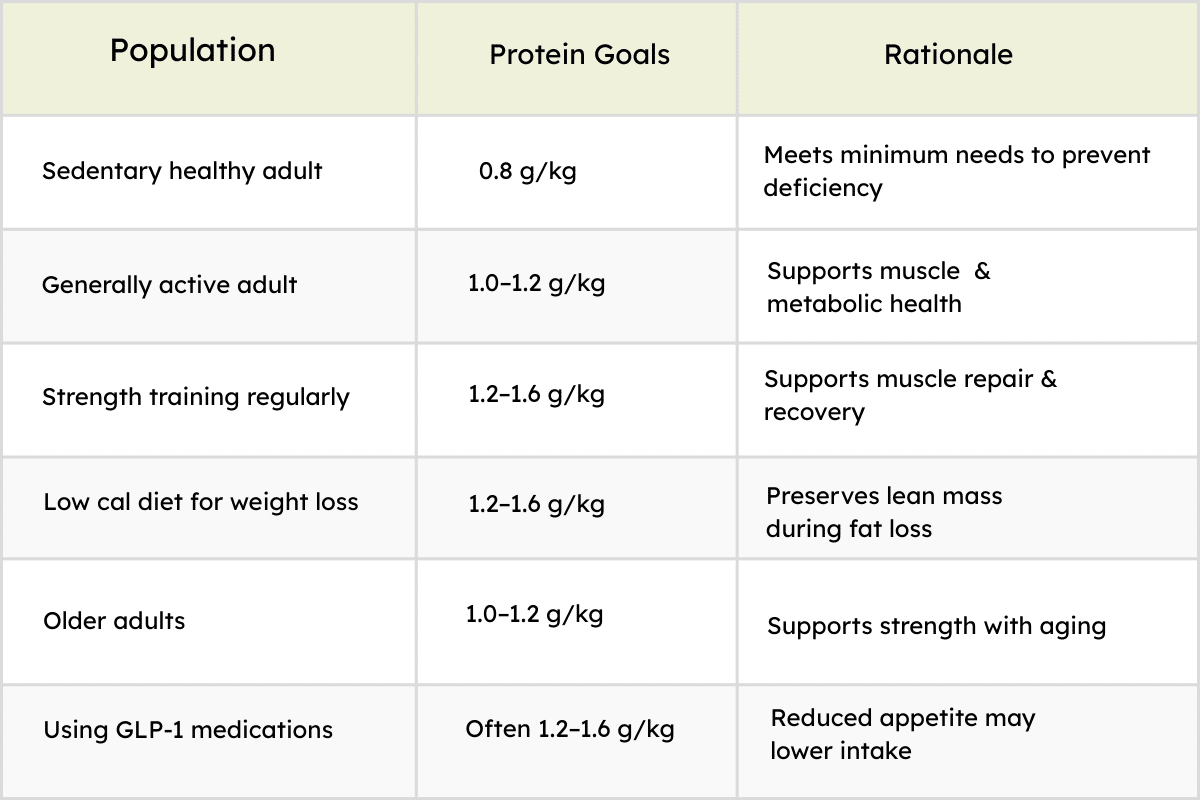
Older Adults As we age, the body becomes less responsive to small doses of protein. This means the same intake that worked well in your 30s may not stimulate muscle maintenance as effectively later in life. For this reason, many experts suggest older adults aim for 1.0 to 1.2 grams per kilogram per day, and sometimes slightly more if strength training or recovering from illness. The goal shifts from avoiding deficiency to preserving strength and physical function.
Very Active Individuals Strength training and higher levels of physical activity increase the demand for muscle repair and recovery. Research commonly supports a range of 1.2 to 1.6 grams per kilogram per day for resistance-trained individuals. Importantly, studies suggest benefits tend to level off around 1.6 grams per kilogram for most people. More is not necessarily better.
Individuals in a Calorie Deficit When calories are reduced for weight loss, some loss of lean mass can occur. A slightly higher protein intake, typically 1.2 to 1.6 grams per kilogram per day, may help preserve muscle during fat loss and support better body composition outcomes.
Individuals Using GLP-1 Medications GLP-1 medications often reduce appetite and overall food intake. When total intake drops, protein intake may decrease as well. Because these medications are frequently used during active weight loss, maintaining adequate protein becomes important for helping preserve lean mass. For many individuals, aiming within the general weight-loss range of about 1.2 to 1.6 grams per kilogram per day may be appropriate, depending on overall calorie intake and medical guidance. For individuals with significant excess body weight, protein needs are sometimes estimated using a realistic goal weight or lean body mass rather than total body weight.
Seeing the numbers by population can make this easier to understand.
How to Calculate Your Protein Needs
Most research on protein recommendations is expressed in grams per kilogram of body weight (g/kg). This simply means multiplying your body weight in kilograms by a protein target that fits your needs.
Start by converting your weight in pounds to kilograms by dividing by 2.2.
For example, a person who weighs 150 pounds would divide 150 by 2.2, which equals about 68 kilograms.
Next, multiply that number by a protein target. If we use a moderate target of 1.2 g/kg, the calculation would look like this:
68 × 1.2 = about 82 grams of protein per day
For most people, this provides a useful starting estimate. However, for individuals who are significantly overweight, it may be more practical to calculate protein needs using a realistic goal weight or lean body mass rather than total body weight.
Another common question is whether you should use your current weight, goal weight, or lean body mass when calculating protein needs. For most people, using current body weight works well. If someone has a significant amount of weight to lose, using a target or goal weight may make more sense. Lean body mass is occasionally used in athletic or clinical settings but is not necessary for most people.
Does Protein Timing Matter?
Meeting your total daily protein needs is the most important step. However, how you distribute protein throughout the day may also make a difference. Many adults consume very little protein at breakfast and most of it at dinner. Research suggests that spreading protein intake more evenly across meals may help support muscle maintenance and satiety.
Some studies suggest that around 25 to 35 grams of protein per meal may help stimulate muscle protein synthesis effectively. However, this should not be interpreted as a strict upper limit. Research has shown that larger protein-containing meals can continue to stimulate muscle protein synthesis for several hours.
Including protein regularly throughout the day may also help control hunger, reduce cravings, and support more stable energy levels. Protein-rich meals stimulate satiety hormones that signal fullness to the brain and help regulate appetite.
In practice, I often see this play out with clients who unintentionally consume very little protein earlier in the day and end up extremely hungry by evening.
One client in her early 50s came to me hoping to improve body composition. She had been experimenting with intermittent fasting and typically skipped breakfast because she “wasn’t really hungry.” By mid-afternoon, however, she found herself snacking frequently and feeling very hungry by dinner.
Dinner often became her largest meal of the day, sometimes including 60 grams of protein or more, partly because she was hungry and partly because she felt she had “earned it.” Despite exercising regularly, she had low energy for morning workouts and wasn’t seeing the body composition changes she expected.
Instead of dramatically increasing her total protein intake, we focused on redistributing it throughout the day. She added a protein-rich breakfast, planned a balanced lunch, and scaled back the very large dinner. Within two months, her energy during workouts improved, her afternoon snacking decreased, and she lost about 2 percent body fat, even though her overall calorie intake changed very little.
Rather than focusing on hitting an exact number at each meal, it can be helpful to include a meaningful source of protein at breakfast, lunch, and dinner while meeting your overall daily protein needs.
Final Thoughts
Protein needs are not one-size-fits-all. They vary based on age, activity level, calorie intake, and health goals. While the official Recommended Dietary Allowance is 0.8 g/kg, many people benefit from somewhat higher intakes to support muscle maintenance, metabolic health, and body composition.
Focusing on consistent protein intake throughout the day, along with strength training and an overall balanced diet, can help support long-term health, strength, and physical function.Keep in mind that muscle health is not just about protein intake. Your muscles also need load from strength training. Protein provides the building blocks, while resistance exercise signals your body to use them.
If you’re unsure how much protein you need or how to structure meals to meet your goals, I’d love to help you with a personalized plan. Learn more about working with me here.
References
Bauer J, Biolo G, Cederholm T, et al. (2013). Evidence-based recommendations for optimal dietary protein intake in older people: A position paper from the PROT-AGE Study Group. Journal of the American Medical Directors Association, 14(8), 542–559. https://pubmed.ncbi.nlm.nih.gov/23867520/
Phillips SM, Fulgoni VL. (2016). Assessment of protein intake in U.S. adults: Potential role of protein in optimal health. American Journal of Clinical Nutrition, 104(4), 1230–1236. https://pubmed.ncbi.nlm.nih.gov/27581497/
Moore DR, Churchward-Venne TA, Witard O, et al. (2015). Protein ingestion to stimulate myofibrillar protein synthesis requires greater relative protein intakes in healthy older versus younger men. Journals of Gerontology Series A, 70(1), 57–62. https://pubmed.ncbi.nlm.nih.gov/25056502/
Mamerow MM, Mettler JA, English KL, et al. (2014). Dietary protein distribution positively influences 24-hour muscle protein synthesis in healthy adults. Journal of Nutrition, 144(6), 876–880. https://pubmed.ncbi.nlm.nih.gov/24744367/
van Loon LJC. (2012). Role of dietary protein in muscle mass and strength maintenance in older adults. Journal of the American Medical Directors Association, 13(8), 713–719. https://pubmed.ncbi.nlm.nih.gov/22840617/
Mitchell WK, Williams J, Atherton P, Larvin M, Lund J, Narici M. (2012). Sarcopenia, dynapenia, and the impact of advancing age on human skeletal muscle size and strength. Journal of Cachexia, Sarcopenia and Muscle, 3(3), 153–160. https://pubmed.ncbi.nlm.nih.gov/22983934/
Mitchell CJ, D’Souza RF, Mitchell SM, et al. (2023). The anabolic response to protein ingestion during recovery from exercise has no upper limit in magnitude and duration in vivo in humans. Cell Reports Medicine, 4(12). https://pubmed.ncbi.nlm.nih.gov/38118410/
Free eBook 4 Days of PCOS Meal Plans
Confused on what to eat with PCOS? Meal planning stressing you out? Let Registered Dietitian and PCOS expert Martha McKittrick help clear the confusion!
Get nutrient packed meal plans & recipes tailored just for PCOS
Anti-inflammatory and low glycemic recipes
Grocery shopping list to take the stress out of shopping
Sign up for my newsletter to get your FREE e-book PLUS my BONUS to you: 30 Nutrition Tips for PCOS
I especially love problem-solving, whether it’s helping women defeat issues plaguing them for years, helping a busy executive find practical ways to get heart healthy, or providing tips to help you reverse diabetes. That’s why I’m on a constant quest to expand my knowledge by staying on top of the latest research.
Feeling overwhelmed after your diagnosis? You don’t have to figure it all out at once. Learn simple, sustainable steps to support your hormones, reduce symptoms, and feel more in control of your health.
You are doing everything right. So why isn't it working?
Take the two-minute Health Detective Quiz to uncover what is really going on beneath the surface. Answer a few quick questions about your real experience, and you will receive a personalized roadmap to finally start feeling like yourself again.
No time to cook? We’ve got you covered. Here are 20 healthy meals from a variety of cuisines that won’t pack on the pounds. Most of them also have less than 30 grams of carbs.
Subscribe to my newsletter and get this free download.
You are doing everything right. So why isn't it working?
Take the two-minute Health Detective Quiz to uncover what is really going on beneath the surface. Answer a few simple questions about your experience, and you will receive a personalized roadmap to finally start feeling like yourself again.