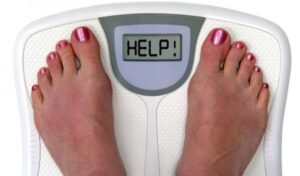
If you are struggling to lose weight or have gained weight for no apparent reason, you aren’t alone. This is the most common complaint I hear from my patients with PCOS. It can be so frustrating to try diet after diet, along with exercise, and get minimal results while you see others around you losing weight on the same program! And the advice given to you by your doctor to “just eat less” is totally useless. The truth of the matter is that there are REAL reasons why it’s more difficult to lose weight with PCOS. But the good news is that the majority of people with PCOS are able to lose weight. It just might take a little detective work to find out what works best for you. I’m sharing my top tips for losing weight with PCOS that have helped many of my clients.
Why is it so hard to lose weight with PCOS?
There are several reasons why it can be more difficult to lose weight with PCOS. This includes the fat-storing effects of insulin, a lower metabolic rate (though not all studies agree on this), higher carb cravings, altered appetite hormones, and more.
7 areas of focus for losing weight with PCOS
Since weight loss is such a HUGE topic that I could break down into 100 blog posts, I’ll provide an overview of some tips that have helped my clients through the years. By no means am I trying to make it seem like I have all the answers or telling you to “just follow my tips, and you’ll lose weight.” It’s so much more complicated. But I’m hoping that you can grab a few tips from my blog post that will help you on your journey. Please keep in mind that weight loss diets need to be tailored to the individual person. This is what I do with my PCOS coaching clients. And each of my tips is only touching the surface area!
There are 7 different areas to focus on when trying to lose weight with PCOS … and they’re all important. It’s common to get caught up in just the diet part – like cutting carbs – or trying the newest “flavor of the month” diet. But here’s the thing – if you don’t set up the framework, NO DIET WILL WORK. If you don’t have the right mindset and stress management techniques, it can be just about impossible to lose weight and keep it off.
And if you don’t work on getting to the root cause of your PCOS, such as stress or insulin resistance, it’s highly unlikely you’ll be able to lose weight and keep it off. The same goes for adequate sleep, meal planning, and a sound support system. Because it’s so common to get caught up with the diet component, these other areas often get neglected. Word of warning: before you read my post, I want to warn you that this post isn’t about giving you a “diet” and meal plan, it’s more about giving you tips for the big picture.
One more thing: please don’t get caught up in the scale. Focus more on how you are feeling, how your clothes fit, your energy levels, your labs (e.g., blood sugar), and your menstrual cycle regularity. If you feel getting on the scale helps motivate you, then go for it. In my experience, it is not helpful for most people.
45 tips for losing weight with PCOS
MINDSET
1. Stay off the diet rollercoaster. It’s so tempting to follow a diet that promises rapid weight loss. But restrictive diets only work short term if they work at all. Then what? You go back to your old habits because diets are not sustainable. The weight comes back on, and maybe even more. And you beat yourself up for not having the willpower to stick to the plan. Not a very healthy cycle! In addition, those with PCOS have higher rates of
eating disorders. Trying to follow unrealistic diets only increases the chances that your eating may become disordered. Now if you really want to try a “diet” short term to gain some momentum, then go for it. But even then, you’ll need to find a more realistic plan you can stick with.
2. Tune out those internet myths that everyone with PCOS needs to avoid gluten, soy, dairy, carbs, etc. Maybe some people feel better avoiding certain foods, but it doesn’t mean YOU have to. Starting out feeling like you need to restrict all these foods will only cause deprivation. If you suspect you might have a food sensitivity, omit that food for a few weeks to see if you feel better. If you notice a difference, you may be best limiting that food. But if you don’t notice a difference, forget about that “restriction”! And for the record, I don’t recommend a very low-carb diet for the majority of people.
3. Don’t compare yourself to others. This is so easy to do, considering our obsession with social media. It’s in our faces! So if Instagram Jenna has PCOS and lost 20 pounds in a month on keto, why can’t you? First of all, rapid weight loss tends to be mainly water. And the quicker it goes off, the quicker it usually comes on. And more important, just because it worked for her, doesn’t mean it’s the best plan for you. If you love steel-cut oats for breakfast, an apple for a snack, and DON’T want to have your veggies swimming in oil, keto probably won’t work for you!
4. Break free from the all-or-nothing way of thinking. All-or-nothing thinking is common in people trying to lose weight. It is especially common if you have PCOS because you’ve probably been told that MANY foods are off limits (and most of this info is inaccurate!) So once you enter into forbidden territory and eat … gasp … a potato …. you feel that you might as well eat everything in sight because you went off the DIET. It will be important that you learn to live in the grey zone versus all or nothing.
5. Become more mindful. Mindfulness is the buzzword these days for good reason! Most of us live hectic lives and don’t pay attention to what we eat, how we feel when we eat, why we eat, etc. Take a step back and slow down. (see #11 on journaling). Being more in tune with your body can help you pay more attention to your hunger cues.
6. Change your mindset. So many of us have rules in our heads when it comes to eating and exercise. Once you break the rule, all bets are off. Try to change your mindset. Instead of saying, “I’m not allowed to eat bread,” you may want to say, “My body feels better when I don’t eat white bread. I’m choosing to have some fruit instead.” BTW- I’m not against bread for PCOS. While I’d recommend whole grain over white, if you had a slice of white bread, it wouldn’t do any permanent damage!
7. Don’t beat yourself up if you stray from your intended plan. This is big one as we can be so hard on ourselves. You may want to analyze what happened and learn from it. Did you get a poor night’s sleep the day before, so your willpower was down? Maybe you went too long without eating? Or maybe you were just human! Practice body kindness, let it go, and move on.
BALANCE HORMONES
8. Get to the root causes of your PCOS. 2 major root causes of PCOS are stress and insulin resistance. And they can both contribute to weight gain. Chronic stress can lead to excessive cortisol production, which can cause weight gain or make it more difficult to lose weight. Furthermore, insulin resistance is associated with high levels of insulin that can cause excessive hunger and fat storage. So unless you deal with these 2 sneaky culprits, you’ll probably have trouble losing weight and, more importantly, keeping it off!
BEHAVIORS
9. Keep a journal. This may be the most important thing you can do to get started on your weight loss journey. Many people keep food logs via an app. But I’m actually a fan of keeping a journal on good old paper and pen because it lets you collect a lot more data. Include the time you eat, what you eat/drink, how much sleep you get, your degree of hunger before eating and satiety after when you get cravings, and, very importantly, how food makes you feel.
10. Analyze your journal. Once you’ve kept the log for a week or two, put your detective cap on and analyze your data. Does going too long in between meals set you up for eating too much at your next meal? Does a poor night’s sleep increase hunger the next day? Does eating a higher protein/fat breakfast hold you longer than a higher carb one? Do you eat more when you are with certain people? Then come up with a plan.
11. Plan ahead for problem situations and come up with a plan. Most people who are “successful losers/maintainers” practice say this is key. Potential problem: Maybe your coworker has candy on her desk that tempts you. Plan: bring in your own healthy snack to help you avoid the candy. Or offer to refill her candy jar with a candy you don’t like. Potential problem: You’re going out with friends to a Mexican restaurant. Plan: Try looking at the menu ahead of time to decide what to order. Have a snack before you go so you aren’t starving. The bottom line: You need to come up with a plan!
12. Plan out meals for the week. Many women say this is one of the most important things they can do to help with weight loss. Take some time on a weekend and write out meal ideas and a grocery list. Find some healthy, tasty recipes on Pinterest or Instagram, or just google “low-calorie, low-carb chicken recipes”.
13. Meal prep. Once you’ve planned your meals, meal prep to get ready for the week. Roast a pan of veggies, grill up a few chicken breasts, and cook a batch of quinoa so you’ll have quick meals ready for the week. You can even freeze your own “frozen dinners” for those busy nights.
14. Have a backup plan for busy nights. We all have busy days when there is no time to cook dinner or we run out of the food we cooked on the weekend. Come up with a backup plan. Maybe you can make a quick omelet with frozen veggies. Or have a healthy frozen dinner on hand (like Luvo) or find a local takeout place that has healthy options.
15. Slim your environment by getting as many trigger foods out of your home or office as possible. Buy a flavor of ice cream you don’t love for your husband or mini bags of nuts if portion control is an issue. Stock up on healthy snacks.
16. Decide how you’ll monitor your progress.To weigh or not to weigh … that is the question. I leave this one up to you. If you find the scale frustrates you or causes decreased motivation and low self-esteem – then avoid it. I encourage most of my clients to judge their progress by their energy levels, their bloodwork, how clothes fit, or their measurements. But on the other hand, some people find the scale a helpful tool to keep them on track. You have to find what works for you!
NUTRITION
17. Include adequate protein at meals, especially breakfast. Protein keeps you feeling full longer and can help prevent those dreaded carb cravings later on in the day. It also helps to prevent/slow the loss of muscle mass that often occurs with cutting down on calories.
18. Don’t cut fats out. Fat helps to slow the rise and fall of blood sugar. It also keeps you feeling full longer and does not cause insulin to be secreted. This is important as most women with PCOS tend to be insulin-resistant. However, be mindful of your portions of fat, as they are high in calories.
19. Pump up the veggies. Vegetables are low in calories and carbs and are loaded with nutrients and fiber. For example, 1/2 cup rice is 100 calories compared to 1/2 cup cauliflower rice for 10 calories! They help to lower cholesterol, aid in gut health, including improving the gut microbiome, and keep you feeling full longer – all super important for PCOS. Substitute cauliflower rice and zucchini noodles for rice and pasta. Mix veggies into omelets and soups. See my previous post on Ways to Make Your Veggies Less Boring
20. Choose low-glycemic carbs like veggies, legumes/beans, fruit including berries,
apples, pears, and whole grains like steel-cut oats, quinoa, faro, whole grain bread, etc. Limit sugary, “white,” or highly processed carbs as they cause more insulin to be secreted, increasing hunger, fat storage, and inflammation.
21. Watch your calories. I usually don’t recommend starting out with counting calories or tracking on a calorie-counting app. This can lead to being obsessed with numbers and even disordered eating in some people. I feel food quality should be the priority. And, of course, moving your body, working on stress, and getting adequate sleep.
But after 6 weeks or so, if you don’t see any progress with the scale (or how your clothes fit), it might be time to take a closer look at your calories. Try tracking what you eat on an app for a few weeks. I like myfitnesspal. The goal is not to make you obsessed with what you are eating but to make you more aware of your intake. Since every person is unique as an individual, it’s difficult to give a calorie goal in this blog post. This is what I do when I work with my PCOS coaching clients. Many of my patients are able to lose weight on 1400-1600 calories. Some can go higher, whereas others may need a bit less. It really depends on a lot of factors, including body size and activity level. But beware of eating too few calories on a regular basis can actually slow your metabolism.
22. How many carbs should you eat a day? This is a difficult question to answer in this blog post as it involves MANY factors (which I consider when working with my coaching clients). I’d say most people don’t have to count carbs. As mentioned above, start out by cutting out sugary drinks and snacks and choosing more whole grains versus “white” or refined. Then start cutting back on portions of carbs and eating more veggies.
MOVEMENT
23. Get a baseline of your steps. Use your phone or an activity tracker. If they’re on the low side (under 5000), then start to increase them slowly. Not only does increased movement help to speed the metabolism, but it can improve insulin sensitivity.
24. Add in weight training. This is an area many people tend to neglect. But it’s so important because muscles help get glucose into the cells to use for energy. This helps to improve insulin sensitivity. In addition, muscles burn more calories than fat. And more muscle equals a faster metabolism. Ideally, weight training 2-3 times a week.
25. Find activities that are fun. You should look forward to it, not dread it! Try a Zumba class or go for a hike with your family if you’re not a gym person.
26. Make it social. Instead of always meeting friends for dinner or drinks, meet for a power walk or yoga class.
27. The ideal exercise program would include a cardio (swimming, bike, elliptical machine, etc) and strength training component. Also, it’s not a bad idea to throw in some yoga!
28. You don’t have to go to the gym. There are plenty of exercise classes On Demand, on video or online.
29. More is not better. Moderate exercise has numerous health benefits for those with PCOS, including decreased insulin resistance, lowered blood sugar, cholesterol, and blood pressure, improved gut microbiome, stress management, improved emotional health, and weight loss. However, excessive exercise can elevate stress hormones. In addition, it can have a negative impact on the immune system and increase fatigue, appetite, and risk of injury. But on the other hand, assuming you don’t have any medical contraindications, you want to push yourself enough to see results.
30. Don’t “outeat” your workout! I see many women wearing fitness trackers take back the extra calories they burned working out. So, for example, if your calorie goal is 1500 and you supposedly burned 500 in your spin class, I would not suggest eating those extra 500 calories if you want to lose weight. Fitness trackers are also notoriously wrong when it comes to calculating calories in exercise. In addition, since you want to lose weight, there should be a calorie deficit. Now, if you were going on a 4-hour bike ride or a day-long hike, you might need some extra calories!
EMOTIONAL HEALTH/STRESS MANAGEMENT
31. Find ways to alleviate stress. Not only can stress worsen symptoms of PCOS, but it can lead to weight gain and other health risks. I’m a huge fan of meditation. Try a meditation app.
32. Find alternate ways to soothe yourself. Many of us eat for emotional reasons or to soothe ourselves. I’m not saying you should never eat for emotional reasons, just find alternate ways to soothe yourself. Maybe it’s taking a bath, listening to music, watching your favorite TV show, or even taking a nap!
33. Come up with tactics to deal with emotional eating. Read some helpful tips by Dr. Gretchen Kubacky, including having a plan, slowing down, grounding yourself, avoiding emotions, and keeping a food/mood journal.
34. Support system. Having PCOS can be stressful. Find a support system in your life, whether it be your family, partner, or online support community (like PCOS Challenge or FB PCOS Psychology)
35. Consider meeting with a therapist.
36. Check out this great book – the PCOS Mood Cure, by Dr. Gretchen Kubacky. LOL – feels like I’m Dr. Gretchen’s PR agent! But she is great 🙂
38. Substitute more veggies for carbs. Instead of one cup of rice, have ½ cup of rice and ½ cup (or more!) of cauliflower rice. Or ½ cup real pasta and 1 cup zucchini noodles. No one wants to see a teeny portion of food on your plate. Adding in more veggies will also trick your brain into thinking you have more food and keep you feeling full longer. And you’ll get more nutrients.
39. Eat slower. You’ve heard this one a million times, but slowing down your rate of eating can really make you feel fuller quicker and ultimately eat less.
40. Drink bubbly water like seltzer before and during meals can help bloat you out and feel full
MEAL TIMING
41. Plan healthy snacks in between meals if you find going too long between meals sets you up for more cravings or getting over-hungry at your next meal. Carb cravings are so common in women with PCOS. Having a snack with protein and fat can be especially helpful in controlling these cravings. Check out my PCOS Snack & Recipe Guide for over 200 ideas for PCOS-friendly snacks.
42. Eat more of your calories earlier in the day. This eating this day is more in tune with our natural biological clock called circadian rhythms. This is especially important for women with PCOS who are insulin-resistant. Eating carbs later in the evening can have more of an impact on insulin levels as compared to earlier in the day.
43. Try eating within a certain window of time. This is called time-restricted eating. Start with a 12-hour window (eat breakfast at 8 am and have your last bite of food by 8 pm). Then go down to a 10 hr window. Studies have shown this can improve metabolic parameters like blood sugar, insulin levels, blood pressure, appetite, and oxidative stress. It has even decreased the incidence of breast cancer. But I’m not a fan of the stricter intermittent fasting for PCOS, where you eat within a 6-8 hr window.
44. Find strategies to deal with nighttime snacking. Many of us are “good” during the day, but the nighttime brings out the food demons. There are several reasons and possible solutions for this. Check out my blog post on strategies to deal with nighttime snacking.
SLEEP
45. Sleep. And last but certainly not least, work on getting adequate sleep. This is one of the areas I find many of my patients neglect. Here are 14 reasons why sleep is important for PCOS. Women with PCOS, especially if obese, have been found to have an increased incidence of sleep disorders. Inadequate sleep has been linked to weight gain. Researchers believe that a lack of sleep alters the release of two hormones that help your body regulate feelings of hunger. When you don’t get enough sleep, your body releases more ghrelin, which stimulates appetite, and release less leptin, which suppresses appetite. In addition, fatigue produced by limiting sleep may reduce physical activity and thus energy expenditure (Pate et al, 2006) and (The Bronfenbrenner Center for Translational Research)
Let me know if these tips were helpful for you!
Do you need help with managing your PCOS? Whether your goals are to have more energy, regulate menstrual cycles, decrease hair/skin symptoms, lose weight, or decrease health risks, I’m here for you! I’ve been specializing in PCOS for over 20 years and helped thousands of women. I have 3 different virtual PCOS coaching programs available. Learn more HERE. Or contact me to learn more!
Free eBook 4 Days of PCOS Meal Plans
Confused on what to eat with PCOS? Meal planning stressing you out? Let Registered Dietitian and PCOS expert Martha McKittrick help clear the confusion!
Get nutrient packed meal plans & recipes tailored just for PCOS
Anti-inflammatory and low glycemic recipes
Grocery shopping list to take the stress out of shopping
Sign up for my newsletter to get your FREE e-book PLUS my BONUS to you: 30 Nutrition Tips for PCOS
I especially love problem-solving, whether it’s helping women defeat issues plaguing them for years, helping a busy executive find practical ways to get heart healthy, or providing tips to help you reverse diabetes. That’s why I’m on a constant quest to expand my knowledge by staying on top of the latest research.
Feeling overwhelmed after your diagnosis? You don’t have to figure it all out at once. Learn simple, sustainable steps to support your hormones, reduce symptoms, and feel more in control of your health.
You are doing everything right. So why isn't it working?
Take the two-minute Health Detective Quiz to uncover what is really going on beneath the surface. Answer a few quick questions about your real experience, and you will receive a personalized roadmap to finally start feeling like yourself again.
Notice: Function WP_List_Util::pluck was called incorrectly. Values for the input array must be either objects or arrays. Please see Debugging in WordPress for more information. (This message was added in version 6.2.0.) in /chroot/home/a2ad11c2/f32220fdad.nxcli.io/html/wp-includes/functions.php on line 6170
Notice: Function WP_List_Util::pluck was called incorrectly. Values for the input array must be either objects or arrays. Please see Debugging in WordPress for more information. (This message was added in version 6.2.0.) in /chroot/home/a2ad11c2/f32220fdad.nxcli.io/html/wp-includes/functions.php on line 6170
Notice: Function WP_List_Util::pluck was called incorrectly. Values for the input array must be either objects or arrays. Please see Debugging in WordPress for more information. (This message was added in version 6.2.0.) in /chroot/home/a2ad11c2/f32220fdad.nxcli.io/html/wp-includes/functions.php on line 6170
No time to cook? We’ve got you covered. Here are 20 healthy meals from a variety of cuisines that won’t pack on the pounds. Most of them also have less than 30 grams of carbs.
Subscribe to my newsletter and get this free download.
You are doing everything right. So why isn't it working?
Take the two-minute Health Detective Quiz to uncover what is really going on beneath the surface. Answer a few simple questions about your experience, and you will receive a personalized roadmap to finally start feeling like yourself again.







 29. More is not better. Moderate exercise has numerous health benefits for those with PCOS, including decreased insulin resistance, lowered blood sugar, cholesterol, and blood pressure, improved gut microbiome, stress management, improved emotional health, and weight loss. However, excessive exercise can elevate stress hormones. In addition, it can have a negative impact on the immune system and increase fatigue, appetite, and risk of injury. But on the other hand, assuming you don’t have any medical contraindications, you want to push yourself enough to see results.
 45. Sleep. And last but certainly not least, work on getting adequate sleep. This is one of the areas I find many of my patients neglect. Here are 14 reasons why sleep is important for PCOS. Women with PCOS, especially if obese, have been found to have an increased incidence of sleep disorders. Inadequate sleep has been linked to weight gain. Researchers believe that a lack of sleep alters the release of two hormones that help your body regulate feelings of hunger. When you don’t get enough sleep, your body releases more ghrelin, which stimulates appetite, and release less leptin, which suppresses appetite. In addition, fatigue produced by limiting sleep may reduce physical activity and thus energy expenditure (Pate et al, 2006) and (The Bronfenbrenner Center for Translational Research)
 Let me know if these tips were helpful for you!

