
updated 11.7.18
One of my followers on my PCOS facebook page recently asked me my thoughts on alcohol and PCOS. As we enter into the holiday season, I thought this would be an appropriate topic to blog about. Whether your holiday plans meeting friends/family for dinner, throwing a party, or just chilling at home, chances are at least some of your socializing includes alcohol. But you may have read on the internet that you should avoid alcohol because it’s “full of sugar” and has a negative effect on your PCOS. So what’s a cyster to do? Read on to get the low down.
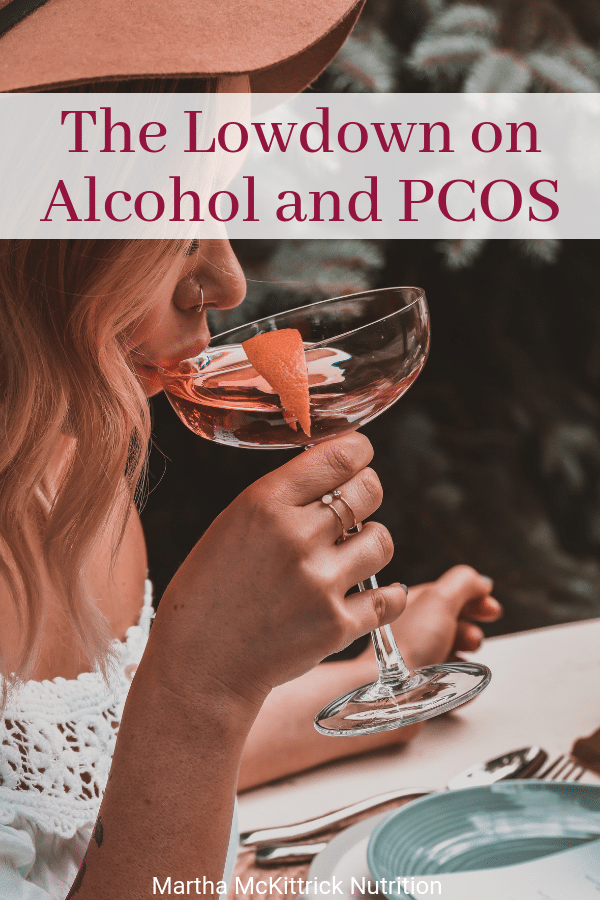
Is alcohol full of sugar?
Yes – if you are talking about a pina colada! But the sugar comes from the mixer not the actual alcohol. It’s true that wine and distilled 
Other considerations for alcohol and PCOS
1. Heart disease. Women with PCOS are at increased risk of heart disease. The good news is that alcohol in moderation (one drink a day for women) actually decreases risk of heart disease. Alcohol in moderation, especially red wine, is a part of the heart healthy, anti-inflammatory Mediterranean diet.
2. Breast cancer. The general recommendation for all women is to limit alcohol to one drink a day to decrease risk of breast cancer. Some studies, but not all studies, suggest women with PCOS may have an increased risk of breast cancer (more studies are needed). FYI – one drink is defined as 12 oz beer, 5 oz wine, 1.5 oz distilled spirits, each of which contain ~ 15 gm alcohol.
3. Sleep disturbances. Women with PCOS have an increased risk of sleep disorders. After a few drinks, you may crash as soon as your head hits the pillow but chances are you are not getting a sound sleep. It’s been shown the alcohol causes a broken sleep due to our bodies are metabolizing it in the middle of the night.
4. Negative impact on gut health. Gut health is a hot topic in the news. We are learning more about how the types and diversity of  bacteria in our guts affect our overall health, including our immune system, body weight, risk of heart disease, diabetes, and more. Studies are showing that alcohol may have a negative effect on gut health and disrupt the gut microbiota.
5. Potential interaction between metformin and alcohol . Metformin is a common medication for women with PCOS to treat insulin resistance. One of the common side effects is gastro-intestinal distress. Alcohol can magnify this. Binge drinking may increase the risk of a rare side effect called lactic acidosis. I’ve also have numerous women who take metformin tell me they don’t feel well when they drink alcohol.
6. Adds calories. On average, a 5 oz glass of wine is 125 calories, a regular beer is 150 calories, vodka and other hard liquor is 100 calories for 1.5 oz (then you would add in calories for mixers), and a martini is 150-250 calories. Some fancy mixed sugary drinks have pack in over 400 calories per drink (and a crazy amount of carbs!)
7. Decreases discipline to watch what you eat. You may start out with the best intentions to avoid bread and dessert … but after  a few drinks, you find your hand reaching into the bread basket or your fork diving into the dessert platter
8. Can cause more hunger later on in the night. When your night has come to an end, many of my clients feel hungry again – even if you just had a large meal. Personally, I could have had a full meal with friends (that includes a few glasses of wine). But on my way home I get these incredible urges for chocolate and often stop into Duane Reade for a “treat”. CONFESSION
9. Feeling “off” the next day. While most of us (but not all of us!) are way past the stage of “massive hangover”
days, even having 2 alcoholic beverages can make us feel out of sorts the next day. Unfortunately as we age, our bodies don’t metabolize alcohol like we used too. Feeling off will likely lead to increased hunger or cravings and poor food choices
hangover”
days, even having 2 alcoholic beverages can make us feel out of sorts the next day. Unfortunately as we age, our bodies don’t metabolize alcohol like we used too. Feeling off will likely lead to increased hunger or cravings and poor food choices
10. Decreased desire to exercise the next day. Whether it’s from a broken sleep/fatigue or feeling “off”, chances are you skip your workout when the alarm goes off at 7 am or you’re dragging by the end of the day so your bootcamp class is not going to happen.
Bottom line:
For many of us, having a glass of wine or cocktail is a part of socializing. The good news is that alcohol can be part of a PCOS friendly diet. But I would recommend that you pay close attention to how it affects your body – especially with regards to mood, sleep, energy and appetite. Keep in mind that it can also be a significant source of calories. Your best bet would be a glass of dry red or white wine or distilled alcohol with a non-caloric mixer like club soda. Avoid drinks with high sugar mixers, limit beer as it contains more carbs or choose a low carb beer. Take home point: alcohol in moderation!
Do you find alcohol has an impact on your mood, sleep, energy, willpower to watch what you eat, etc. ?