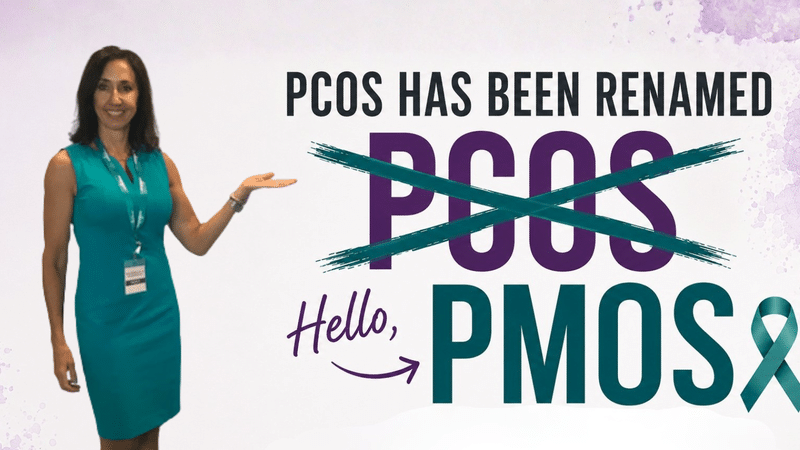
If you were shocked this week when you heard that PCOS was officially renamed PMOS, you aren’t alone. As a registered dietitian specializing in PCOS for over 20 years, I was pretty surprised myself.
While I knew discussions about changing the name had been happening behind the scenes for months, I had no idea what the final name would actually be until the announcement was made.
The new name, polyendocrine metabolic ovarian syndrome (PMOS), is meant to better reflect the full complexity of this condition, especially the hormonal and metabolic issues that many people with PCOS experience.
So let’s talk about what this new name means, my thoughts on it, and most importantly, what it means for you.
What Is PMOS?
PMOS stands for polyendocrine metabolic ovarian syndrome.
The new name was created to better reflect the fact that PCOS is much more than just an ovarian or reproductive condition. It can affect multiple hormone systems throughout the body and is often closely tied to metabolic health and insulin resistance.
Here’s what the new name means:
- Polyendocrine = involves multiple hormone systems in the body
- Metabolic = affects metabolism, insulin, blood sugar, and energy regulation
- Ovarian = involves the ovaries and reproductive health
- Syndrome = a group of symptoms and health issues that occur together
For years, many experts and patients felt the name “polycystic ovarian syndrome” didn’t fully capture the complexity of the condition. In fact, many people with PCOS don’t even have ovarian cysts.
Why Was PCOS Renamed PMOS?
One of the biggest reasons behind the name change is that the term “polycystic ovarian syndrome” never fully reflected what this condition actually involves.
For starters, the “cysts” in PCOS are not actually ovarian cysts. They are immature follicles that never fully matured and released an egg during ovulation. On ultrasound, these follicles can create the classic “string of pearls” appearance often associated with PCOS. At the same time, not everyone with PCOS even has this ultrasound finding, which has created confusion for years among both patients and healthcare providers.
The old name also placed a heavy focus on the ovaries and reproductive symptoms, even though PCOS can affect many other areas of health. We now know that PCOS is often closely connected to insulin resistance, blood sugar regulation, cholesterol levels, inflammation, sleep, mental health, and cardiovascular risk.
For many people, the metabolic symptoms can have just as much impact on daily life as irregular periods or fertility concerns.
And honestly, many people with PCOS have experienced firsthand how misleading the old name could be. How many times have you told someone you have PCOS only to receive a blank stare followed by, “What’s wrong with your ovaries?” Or maybe you were told by a healthcare provider that you “look fine” or must have a “mild case” because you weren’t trying to get pregnant or didn’t fit a certain stereotype.
Many people were never warned about the potential long-term metabolic health effects associated with PCOS, including insulin resistance, prediabetes, type 2 diabetes, or increased cardiovascular risk. The new name attempts to better reflect the fact that this is not simply an ovarian condition. It’s a complex hormonal and metabolic disorder that can affect the entire body.
My Thoughts After Specializing in PCOS for Over 20 Years
As someone who has specialized in PCOS for over 20 years, I have mixed feelings about the name change. On one hand, I think it reflects how much our understanding of this condition has evolved. When I first started working in this field, many people had never even heard of PCOS. Patients often struggled for years to get diagnosed, felt dismissed, or were told their symptoms were simply related to weight, stress, or “normal hormone changes.”
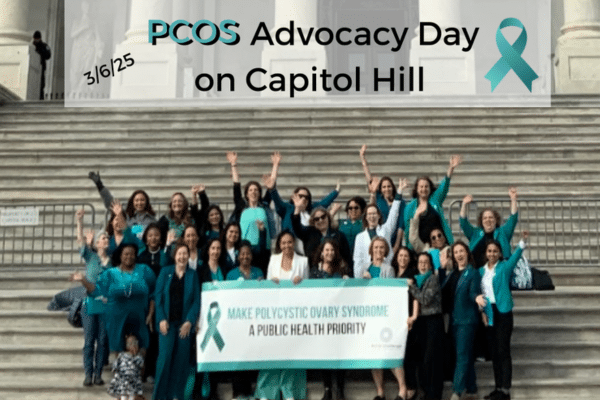
Below is PCOS Advocacy Day with PCOS Challenge on Capitol Hill. Raising awareness and speaking with lawmakers about the need for better PCOS research, education, and care. We do this every year – in person or virtually. Join us next March!
I still remember submitting a nutrition article about PCOS to a peer-reviewed publication in the early 2000s. It was initially rejected because I was told insulin resistance had nothing to do with PCOS. Looking back now, that’s almost hard to believe. Eventually the article was accepted, but that experience always stayed with me because it reflected how little was understood about the metabolic side of PCOS at the time.
Over the years, advocacy organizations, especially PCOS Challenge, researchers, healthcare professionals, and people openly sharing their experiences on social media have all helped bring more visibility and awareness to this condition.
But despite this progress, PCOS is still incredibly misunderstood. Many people still struggle for years to get diagnosed, feel dismissed by healthcare providers, or are told their symptoms are “not severe enough” to worry about. Some estimates suggest that up to 70% of people with PCOS may not even know they have it.
And even after diagnosis, many people are given very limited treatment options, often being told to simply lose weight, go on birth control pills, or take metformin.
That’s part of why this name change brings up such mixed emotions for me. Part of me worries whether changing the name could create confusion or make us feel like we are starting all over again after spending so many years building awareness around the term “PCOS.”
But another part of me wonders whether including the word “metabolic” could ultimately help move the conversation forward in important ways. Will healthcare providers begin taking the metabolic side of PCOS more seriously? Could research funding become more available as the condition becomes more clearly connected to long-term metabolic health risks? Might we eventually see more treatment options and even medications specifically approved for PCOS rather than relying almost entirely on off-label use?
I don’t know the answers yet. But I do think this name change reflects a larger shift in how we understand PCOS today compared to even a decade ago.
Mixed Reactions to the PCOS to PMOS Name Change
Since the announcement, I’ve seen a wide range of reactions online and within the PCOS community.
Some people feel hopeful and validated. For many, seeing the words “metabolic” and “polyendocrine” included in the new name feels like long-overdue recognition that PCOS affects far more than fertility or ovarian function alone. Some have said, “Finally, they’re acknowledging what we’ve been dealing with all along.”
Below is video below Celebrating PCOS Awareness at the New York Stock Exchange closing bell ceremony with PCOS Challenge advocates and supporters.
Others feel frustrated, skeptical, or even overwhelmed. And honestly, I understand why. Some reactions online have even brought a little humor to the conversation. I’ve already seen jokes that PMOS stands for “Pissed Me Off Seriously,” which honestly captures just how emotional and personal this change feels for many people.
And honestly, I understand why.
Many people are asking an important question: Will changing the name actually improve care?
A new name alone will not suddenly shorten the years it often takes to receive a diagnosis. It won’t automatically improve access to knowledgeable healthcare providers, increase research funding, or create better treatment options overnight.
Right now, there are still no medications specifically FDA-approved for PCOS. Many treatments commonly used for PCOS, including medications for insulin resistance, cycle regulation, or weight management, are prescribed off-label.
There’s also concern that changing the name could initially create even more confusion for people who are newly diagnosed or have spent years identifying with the term PCOS.
At the same time, others feel this change may help move the conversation forward by encouraging healthcare providers and the public to think about PCOS more broadly and recognize the metabolic health risks that are often overlooked.
I think both perspectives are valid.
What Actually Needs to Change in PCOS Care
While the name change has sparked important conversations, what people with PCOS truly need goes far beyond a new acronym.
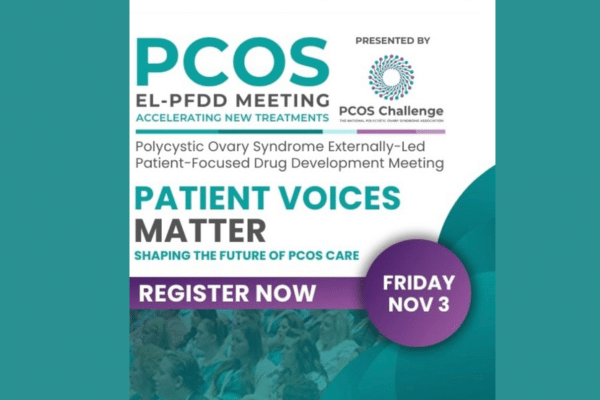
Below is from the Polycystic Ovary Syndrome Externally-Led Patient-Focused Drug Development (PCOS EL-PFDD) Meeting presented by PCOS Challenge, which I had the honor of moderating. This important meeting brought together patients, advocates, researchers, healthcare professionals, the FDA, and industry leaders to share real patient experiences and priorities in hopes of accelerating the development. Learn more here
- We need earlier diagnosis. Many people spend years struggling with symptoms before finally getting answers, and some estimates suggest that up to 70% of people with PCOS may not even know they have it.
- We need better education for healthcare providers. Too many people are still told their symptoms are “normal,” dismissed because they don’t fit a certain stereotype, or only receive support when trying to get pregnant.
- We need more research funding and better treatment options. Despite how common PCOS is, there are still no medications specifically FDA-approved for the condition itself. Many treatments currently used for PCOS are prescribed off-label.
- Insurance coverage also remains a major barrier. Many people with PCOS struggle to get coverage for newer medications like GLP-1 receptor agonists, despite growing evidence that these medications may help address insulin resistance, weight management, and metabolic health in PCOS.
- We also need greater recognition that PCOS is not a one-size-fits-all condition. Some people struggle more with insulin resistance and metabolic health. Others are primarily affected by irregular cycles, fertility challenges, acne, hair growth, hair loss, or mental health concerns. Many experience a combination of symptoms that can change throughout life.
- And importantly, care needs to move beyond focusing only on weight or fertility.
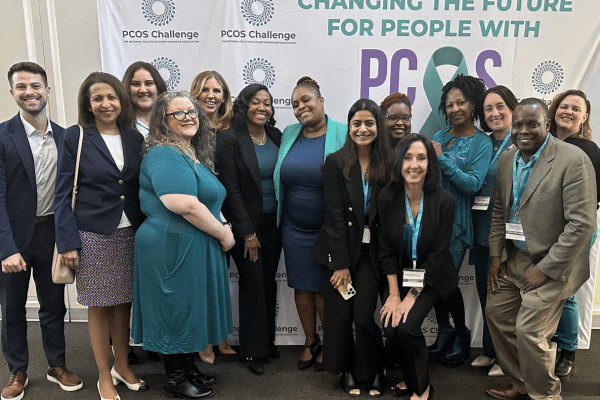
Below is an incredible group of advocates, researchers, healthcare professionals, industry leaders, and patients coming together to push for better research, treatment options, and care for PCOS at the PCOS EL-PFDD meeting.
PCOS can affect health across the lifespan, including blood sugar regulation, cardiovascular health, sleep, mood, and overall quality of life. People deserve individualized care that addresses the full picture, not just one symptom.
The good news is that conversations around insulin resistance, metabolic health, and the long-term health effects of PCOS are becoming more common than they were 20 years ago. That progress matters.
But there is still a long way to go.
I’d genuinely love to hear your thoughts on the name change and what you hope changes for PCOS care moving forward.